Incendies en Kabylie


Keshab Sigdel: I have read about the long history of the Kabyle people and their fight for justice
A major figure in contemporary Nepalese poetry, Keshab Sigdel discusses his politically engaged writing and his latest collection, Embargo, translated into French by Alexandra Cretté and published in 2025 by Éditions du Cygne. Through his texts, he explores justice, human dignity, memory, ecology, and the future of societies striving for freedom. In this conversation, he also addresses the struggle of the Kabyle people and calls for intercultural dialogue.
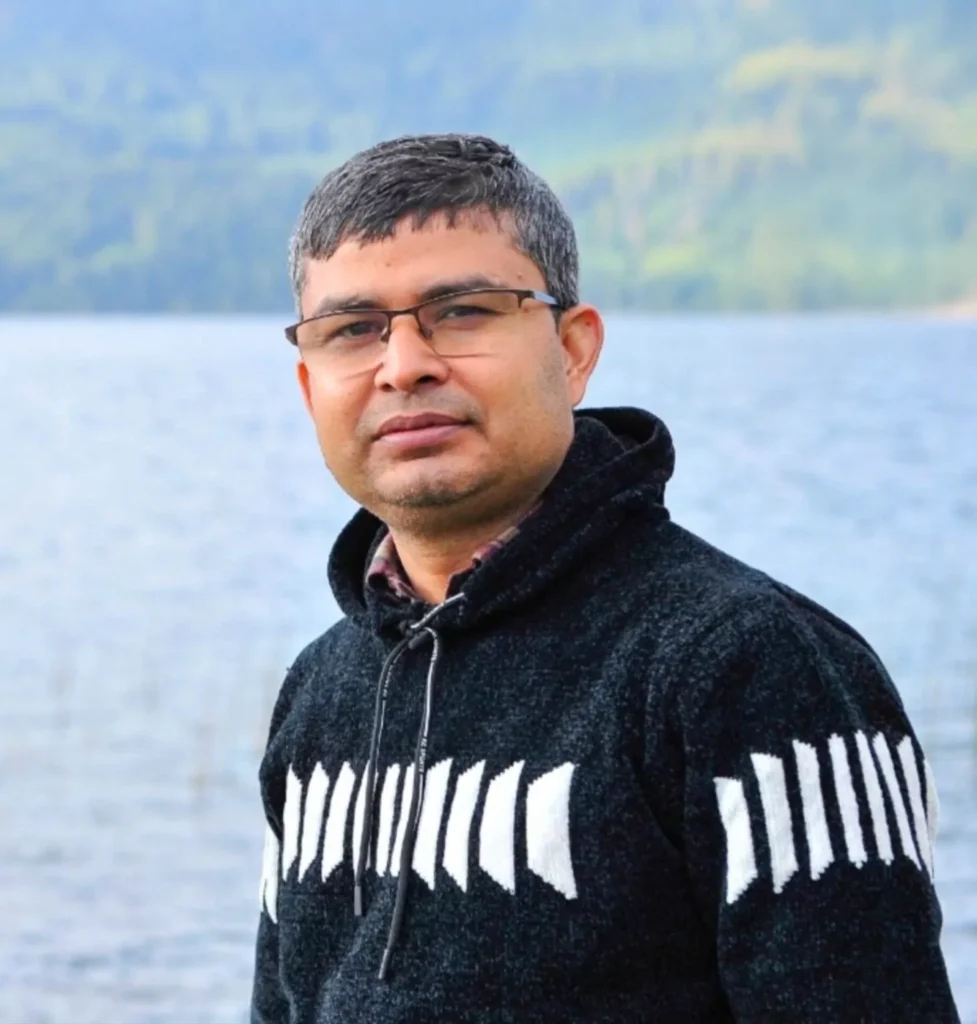
Keshab Sigdel
KABYLE.COM: Hello, Mr Keshab Sigdel. We are delighted to interview you on Kabyle.com!
KESHAB SIGDEL: Thank you very much. I feel honoured. I hope this conversation will be able to create more opportunities for further literary and cultural dialogues between Nepal and your country.
Reading your work, we sense a dark view of the world and a melancholic feeling emanating from your poetry. Is the poet doomed to be this way?

Poets and creative artists always write to envision a just world for the future. However, that vision is possible only through engagement with the past and the present in which we live. Unless we understand how most of our lives are shaped by past and present social, political, and economic injustices, we will not be able to plan our future course. Any dark and melancholic narratives in my writings (and I believe it is equally true of the writings of other poets) are a part of working through the trauma of the past, so that we are better positioned to move forward towards a better future.
Your country, Nepal, is going through a complicated situation at the moment. How does the poet view politics, and what is his place in the dynamics of change?
Yes, Nepal is going through a difficult situation, but with a new hope. In the 1950s, Nepali people fought for a democratic transformation against the authoritarian rule of the Rana dynasty, which was, however, sabotaged by another authoritarian rule through a partyless Panchayat system with an active monarchy. In 1990, a People’s Movement, known as a janaandolan, restored democracy. But there are issues of inclusion that need to be addressed. In 2006, another people’s movement overthrew a nearly two-and-a-half-decade-long monarchy in Nepal, transforming it into a democratic republic. Although it addressed the issues of inclusion, those constitutional provisions were misused by politicians. A group of young people, who were thought to be ‘unconcerned’ about political affairs, suddenly came to the streets against growing nepotism, corruption, and ill-governance. It was a movement not against the democratic system but against the corrupt leadership. We now have an interim government to conduct a fresh election, as the existing parliament has been dissolved. However, there are strong opinions about the need for constitutional reforms regarding an ‘exit policy’ that requires a leader to relinquish party and government power after a specific period. Moreover, we have China and India as our immediate neighbours, who have their own interests, along with those of the United States. Therefore, striking a balance between individuals’ internal aspirations and external interests is a significant challenge. Poets and creative writers in Nepal have consistently voiced the aspirations for change in the country. When the political parties were discredited for corruption, it was poets and artists who took to the streets to voice the call for change. Nepali society has a high regard for creative artists due to their contributions to social and political transformation.
In your collection Embargo, interrogative sentences are recurrent. Are they not a way of involving the reader in your questions and/or encouraging them to reflect?
We live in a multicultural society with different world views. As a poet and activist involved in democratic and justice movements, I believe it is essential for us to listen to others’ voices and respect differences. Questions provide a forum for open dialogues. Through assertive statements, we close the dialogues. I believe that we should always keep the possibility of dialogue open. You are right that the use of an interrogative sentence is an effective way to engage readers, creating a democratic space for dialogue.
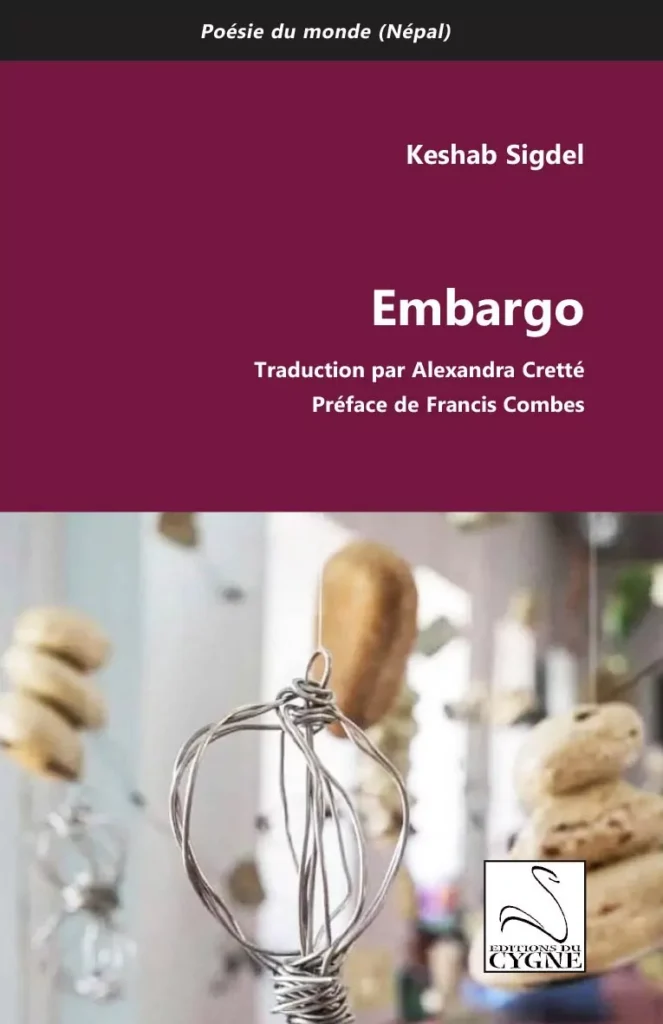
Keshab Sigdel Embargo
In your poem entitled « Sophia, my Robot Wife! », you humorously attack the reification of humanity by civilization and technological advances. With the advent of AI and other new technologies in the future, aren’t you afraid of the total dehumanization of humanity?
This poem has a context. Sophia is the name of a humanized robot that was brought to Kathmandu in 2018 as a keynote speaker at a conference on “Technology for Public Services” organized by the United Nations Development Programme (UNDP). The aim of her visit was to explore how technology and AI could enhance development in Nepal. Such technological advancements are essential. However, they should be used in the service of humanity, not at the expense of humanity. The existing economic injustice is coupled with the growing digital divide. And our agenda of justice is threatened when our emphasis is diverted to technologies, ignoring the pressing issue of human dignity.
Keshab Sigdel, you also address ecological issues, as evidenced by this poem entitled “Tree and the Birds.”
« A tree fell.
With its falling
A world a pair of birds created in this tree
Also got collapsed. »
Do you think that the fight to protect nature and the ecosystem is as essential as all the other struggles that poets engage in?
Many writers have addressed ecological issues. But they are either anthropocentric or disconnected from the social realities. “Tree and the Birds” is a double-layered poem. At the most obvious level, it suggests a more holistic view of ecology when human beings, animals, birds, and plants are all considered part of the ecosystem. At a metaphorical level, it suggests the migration pattern of the youths and the disintegration of the older generation, who are compelled to adapt to a newer (and often harsher) reality where their old habitat and culture are collapsing. I think the loss of comfort zones for older people and their disconnection from their children is creating new challenges. I think these issues should be a part of humanitarian concerns.
Which poets influence your poetic writing?
I did not write under the influence of any individual poet, nor am I a follower of any poetic school. When you are a ‘follower’ of a certain poetic tradition, you start creating a dogma. I keep myself independent of any such traditions. I believe in my conscience. However, from my early days, many poets, writers, and philosophers have had a great impact on shaping my worldview. I honour them all.
What are your plans for the future?
As a University teacher of English studies, I have regular work teaching courses on literary theories and various literary genres. I am currently active with World Poetry Movement, which mobilizes poets and literary organizations for poetic actions on urgent global issues such as migration, indigenous rights, and justice. Currently, we have been campaigning for justice alongside the people of Gaza. Additionally, I am involved in editing a global poetry magazine called Poetry Planetariat. I am also working on my new Nepali poetry anthology, which I hope to publish next year. I also have a couple of literary translation projects.
Thank you very much for answering our questions. Any final words?
I have read about the long history of the Kabyle people and their fight for justice. Now, it is time that we create opportunities for greater people-to-people dialogue beyond our geographical borders. I also thank you for this opportunity to express my views about my writings and on other social issues through your popular magazine.
Interview made by Amar Benhamouche


